





Why Are Black Women Born with Curly Hair?
 Jocelyn
Posts: 131
Jocelyn
Posts: 131
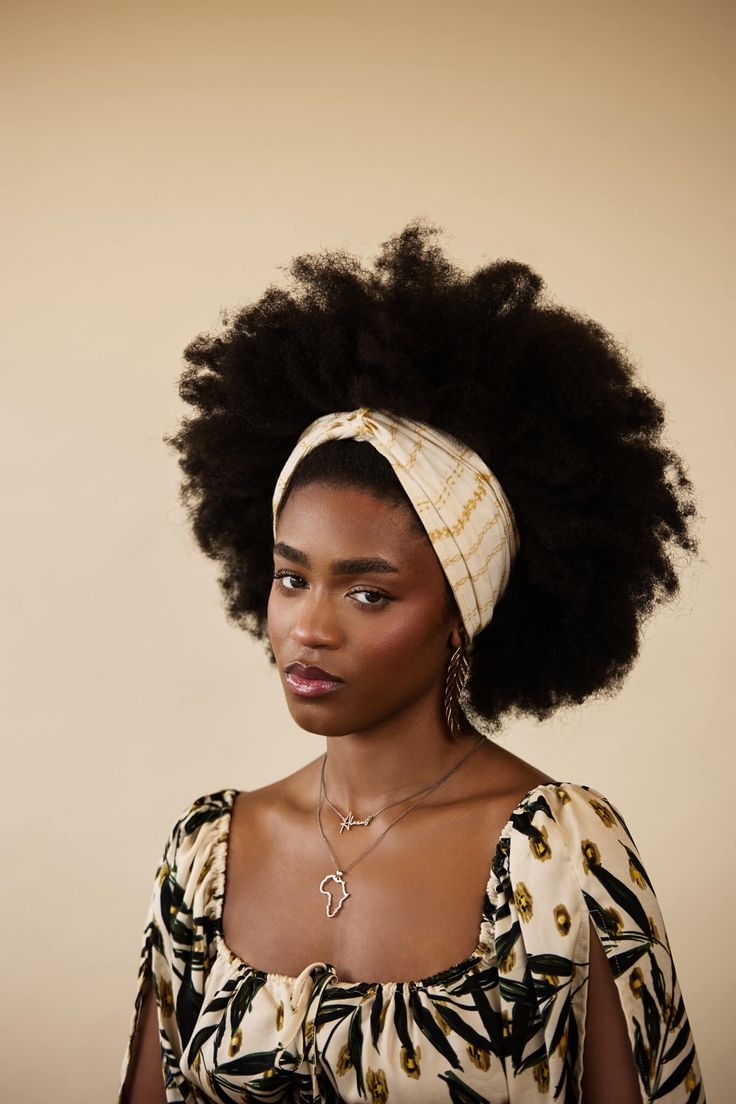
When we examine the beautiful landscape of human diversity, hair is undoubtedly one of the most striking features. The thick, curly, and bouncy hair of Black women is not just an outward feature; it represents a life story filled with wisdom and resilience. So, why is Black women born with curly hair? The answer lies in a complex web of genes, environment, and historical and cultural influences.
1. Scientific Explanation: The "Architecture" of Hair Follicles
Hair shape is fundamentally determined by the shape of the follicle.
Straight Hair and Round Follicles: People with straight hair have perfectly round follicles beneath their scalp. Growing from a round "mold," the hair has a round cross-section, allowing it to grow straight.
Curly Hair and Oval/Flat Follicles: Curly hair, on the other hand, has follicles that are oval or even flat. When hair is "squeezed" from this non-round follicle, its cross-section becomes flat. This asymmetrical structure prevents hair from stretching evenly during growth, forcing it to bend, creating the curls or corkscrews we see.
For most people of African descent, their genes predispose them to highly flattened hair follicles. Consequently, the hair that grows is tightly curled together, forming remarkably elastic ringlets.
2. A Gift of Evolution: Environmental Adaptability
This unique hair structure is no accident; it is a remarkable survival strategy evolved by our ancestors to adapt to a specific environment.
Efficient "Insulator": Africa experiences intense sunlight and a hot climate. Thick, curly hair forms an air-filled, "sponge-like" buffer between the scalp and the external environment. This buffer effectively insulates the head from the intense heat of direct sunlight, keeping the head cool and acting like a natural "sun hat" for the brain.
Natural "Protection": The curly hair structure reduces hair length, preventing sweat from evaporating too quickly, helping the body retain moisture and regulate body temperature more effectively in hot environments. Furthermore, the tight curls also provide better protection for the scalp from UV rays.
Easy to Care: This structure also makes it more suitable for creating various protective hairstyles in dry conditions, such as braids and dreadlocks. These styles not only protect hair from damage but also last for weeks, making them highly practical.
Thus, curly hair is a precious legacy of natural selection, a sophisticated design for the body to survive and thrive in specific environments.
3. Beyond Biology: Hair and Cultural Identity
Black women's hair is far more than a biological characteristic. Throughout history, it has carried profound cultural, political, and social significance.
Forced Silence and Self-Awakening: During slavery and colonialism, natural hair among African American women was stigmatized and considered a symbol of "uncivilized," forcing many to resort to extreme hair straightening to conform to mainstream aesthetics. This history has made hair a hallmark of racial oppression.
The "Natural Hair Movement" and Protestantism: From the "Black is Beautiful" movement of the 1960s to today, more and more Black women are embracing their natural hair. They reject chemical perms and heat straightening, proudly sporting styles like afros, twists, and Afros. This isn't just an aesthetic choice; it's a powerful political statement and a return to cultural identity—a full acceptance and celebration of self, ancestors, and unique beauty.
Diverse Expression and the Empowerment of Technology: Modern hairstyling technology has also provided Black women with unprecedented opportunities for diverse expression. They can choose to protect and showcase their natural hair, or explore a variety of styles with innovative hair products. For example, easy-to-wear, scalp-friendly glueless lace wigs, or high-quality human hair extensions like Burmese curly bundles, have become powerful tools for them to freely control their style and express their individuality while respecting the health of their natural hair.
Conclusion
So, when you see a Black woman's vibrant curls again, you're seeing more than just a physical characteristic. What you see is a microcosm of human evolution, the crystallization of our ancestors' wisdom in responding to nature; what you see is a cultural mirror reflecting the journey of struggle, liberation, and self-definition; what you see is the blossoming of a unique vitality.
Every curl is a mark of life; every form is a hymn to diversity. The curls of Black women are a treasure woven together by science and humanity, a beautiful symbol worthy of understanding and respect by all.
1. Scientific Explanation: The "Architecture" of Hair Follicles
Hair shape is fundamentally determined by the shape of the follicle.
Straight Hair and Round Follicles: People with straight hair have perfectly round follicles beneath their scalp. Growing from a round "mold," the hair has a round cross-section, allowing it to grow straight.
Curly Hair and Oval/Flat Follicles: Curly hair, on the other hand, has follicles that are oval or even flat. When hair is "squeezed" from this non-round follicle, its cross-section becomes flat. This asymmetrical structure prevents hair from stretching evenly during growth, forcing it to bend, creating the curls or corkscrews we see.
For most people of African descent, their genes predispose them to highly flattened hair follicles. Consequently, the hair that grows is tightly curled together, forming remarkably elastic ringlets.
2. A Gift of Evolution: Environmental Adaptability
This unique hair structure is no accident; it is a remarkable survival strategy evolved by our ancestors to adapt to a specific environment.
Efficient "Insulator": Africa experiences intense sunlight and a hot climate. Thick, curly hair forms an air-filled, "sponge-like" buffer between the scalp and the external environment. This buffer effectively insulates the head from the intense heat of direct sunlight, keeping the head cool and acting like a natural "sun hat" for the brain.
Natural "Protection": The curly hair structure reduces hair length, preventing sweat from evaporating too quickly, helping the body retain moisture and regulate body temperature more effectively in hot environments. Furthermore, the tight curls also provide better protection for the scalp from UV rays.
Easy to Care: This structure also makes it more suitable for creating various protective hairstyles in dry conditions, such as braids and dreadlocks. These styles not only protect hair from damage but also last for weeks, making them highly practical.
Thus, curly hair is a precious legacy of natural selection, a sophisticated design for the body to survive and thrive in specific environments.
3. Beyond Biology: Hair and Cultural Identity
Black women's hair is far more than a biological characteristic. Throughout history, it has carried profound cultural, political, and social significance.
Forced Silence and Self-Awakening: During slavery and colonialism, natural hair among African American women was stigmatized and considered a symbol of "uncivilized," forcing many to resort to extreme hair straightening to conform to mainstream aesthetics. This history has made hair a hallmark of racial oppression.
The "Natural Hair Movement" and Protestantism: From the "Black is Beautiful" movement of the 1960s to today, more and more Black women are embracing their natural hair. They reject chemical perms and heat straightening, proudly sporting styles like afros, twists, and Afros. This isn't just an aesthetic choice; it's a powerful political statement and a return to cultural identity—a full acceptance and celebration of self, ancestors, and unique beauty.
Diverse Expression and the Empowerment of Technology: Modern hairstyling technology has also provided Black women with unprecedented opportunities for diverse expression. They can choose to protect and showcase their natural hair, or explore a variety of styles with innovative hair products. For example, easy-to-wear, scalp-friendly glueless lace wigs, or high-quality human hair extensions like Burmese curly bundles, have become powerful tools for them to freely control their style and express their individuality while respecting the health of their natural hair.
Conclusion
So, when you see a Black woman's vibrant curls again, you're seeing more than just a physical characteristic. What you see is a microcosm of human evolution, the crystallization of our ancestors' wisdom in responding to nature; what you see is a cultural mirror reflecting the journey of struggle, liberation, and self-definition; what you see is the blossoming of a unique vitality.
Every curl is a mark of life; every form is a hymn to diversity. The curls of Black women are a treasure woven together by science and humanity, a beautiful symbol worthy of understanding and respect by all.
Share this post
Naijanetwork Forum Statistics
Threads: 38005,
Posts: 47606,
Members: 35608