





How AI and Automation Are Revolutionizing Food Delivery Apps
 aartij
Posts: 39
aartij
Posts: 39
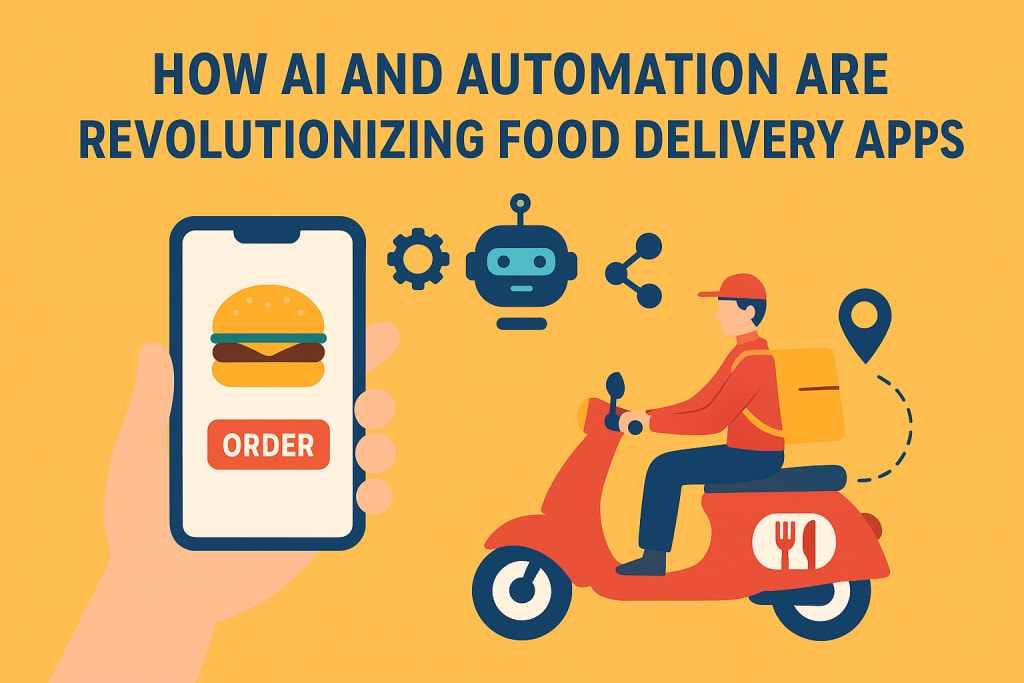
The world of food delivery is evolving faster than ever. With the rapid adoption of Artificial Intelligence (AI) and automation, the way customers order, restaurants operate, and couriers deliver has completely transformed. These technologies are not only reshaping the user experience but also redefining business efficiency, sustainability, and personalization in the food delivery ecosystem.
In the post-pandemic era, online food delivery became more than just a convenience—it became an expectation. Consumers demand speed, reliability, and personalization, and AI-driven solutions are meeting these expectations seamlessly. From intelligent recommendations to predictive delivery times and automated kitchens, AI and automation have become the backbone of modern food delivery platforms.
1. Personalized Recommendations and User Experience
One of the most visible ways AI is revolutionizing food delivery apps is through personalization. AI algorithms analyze user data, including previous orders, favorite cuisines, and even browsing behavior, to recommend dishes or restaurants tailored to individual preferences.
For instance, a user who frequently orders vegetarian food on weekends might see new plant-based restaurants at the top of their feed. Similarly, if the weather forecast predicts rain, AI can suggest comfort foods like soup or coffee. This kind of intelligent personalization keeps users engaged and encourages repeat orders, boosting customer loyalty.
AI also plays a role in understanding user sentiment. Through machine learning models, food delivery platforms can analyze feedback, reviews, and ratings to identify pain points and enhance customer service. By proactively addressing issues such as late deliveries or inaccurate orders, apps can significantly improve customer satisfaction.
2. Smarter Order Management and Inventory Optimization
Automation and AI are streamlining order management like never before. In traditional delivery systems, restaurants often struggled with order accuracy and timing. Now, AI-based systems predict order preparation time, track kitchen workflows, and automatically assign delivery drivers based on location, order priority, and traffic data.
These systems ensure a smooth order flow from restaurant to customer. For example, when a restaurant receives multiple orders at once, AI helps prioritize them based on preparation time and delivery distance. This reduces customer wait times and optimizes driver efficiency.
In addition, AI helps restaurants manage their inventory better. By predicting peak hours and analyzing historical sales data, restaurants can anticipate demand for specific dishes and ingredients. This minimizes food waste and ensures that popular items are always available.
Businesses entering this sector often collaborate with experts in grocery app development to leverage similar predictive models for inventory and logistics management. Such technological integration bridges the gap between food delivery and retail, allowing seamless order tracking and resource optimization.
3. Route Optimization and Real-Time Tracking
Timely delivery is the heart of any successful food delivery app. AI and automation make this possible by enhancing route optimization and tracking accuracy.
AI-powered algorithms analyze traffic patterns, weather conditions, and delivery locations in real time to determine the most efficient route for drivers. These algorithms can dynamically reroute couriers if a sudden traffic jam or road closure occurs. This not only speeds up deliveries but also reduces fuel consumption and operational costs.
Customers, on the other hand, benefit from accurate real-time tracking. Advanced GPS systems powered by AI provide precise ETAs and live updates. This level of transparency builds trust and ensures customers stay informed about every stage of their order—from preparation to doorstep delivery.
Some platforms have taken it a step further by integrating AI chatbots and voice assistants that offer instant updates, delivery assistance, and issue resolution—reducing the dependency on human support staff.
4. Autonomous Deliveries: The Future of Food Logistics
Automation is moving beyond the kitchen and into the streets. Autonomous delivery vehicles and drones are gradually entering the mainstream. While still in experimental stages in many regions, companies are already piloting robotic delivery systems that can transport food over short distances.
These robots use AI for navigation, object detection, and obstacle avoidance, ensuring safe and efficient delivery without human intervention. Similarly, drone-based delivery is gaining traction for faster, contactless drop-offs, especially in urban areas or remote locations.
Such innovations are not just futuristic—they’re practical solutions to reduce labor costs, enhance scalability, and improve sustainability. By using electric-powered autonomous systems, companies can significantly lower their carbon footprint, contributing to eco-friendly operations.
5. Smart Kitchens and Automated Operations
Behind every successful delivery app lies a well-coordinated kitchen operation. AI-driven “smart kitchens” are transforming how food is prepared, stored, and served.
In automated cloud kitchens, robots and intelligent appliances handle repetitive tasks such as chopping, frying, and assembling meals. Machine learning systems monitor ingredient quality, cooking times, and temperature controls to ensure consistency and safety.
These innovations help restaurants process large volumes of orders efficiently without compromising on quality. They also allow smaller businesses to scale quickly without requiring additional manpower.
AI-based demand forecasting systems also help kitchens prepare for rush hours. By predicting order volume, these tools help staff allocate resources and schedule workers more effectively.
6. Fraud Prevention and Data Security
The more digital transactions occur, the greater the need for strong security. AI plays a crucial role in detecting fraudulent activities, protecting both customers and businesses.
Machine learning algorithms continuously analyze user transactions to spot anomalies—such as unusual order frequency, location mismatches, or payment irregularities. Once detected, the system can instantly flag or block suspicious activity.
Moreover, AI-based encryption and authentication systems protect sensitive user information like payment details and addresses. This ensures that every transaction remains secure, boosting consumer confidence in digital food services.
7. Enhancing Business Decisions with Predictive Analytics
Data is the new currency in the food delivery sector. AI transforms massive datasets into actionable insights that help businesses make smarter decisions. Predictive analytics can forecast customer behavior, seasonal demand, and delivery bottlenecks.
For example, an app can predict which locations will experience higher orders during specific events—like the Super Bowl or New Year’s Eve—and allocate more drivers there in advance. This ensures efficient resource utilization and improved service quality.
Predictive tools also help restaurants design personalized marketing campaigns. By analyzing user patterns, businesses can send targeted promotions and discounts that resonate with individual customers, increasing conversion rates.
8. The Role of Specialized Development Companies
Building a food delivery app infused with AI and automation requires expertise in advanced technologies and user experience design. Partnering with a reliable Food Delivery App Development Solutions ensures seamless integration of AI models, real-time analytics, and automation frameworks. These experts understand the balance between innovation and functionality, helping businesses stay competitive in a fast-moving digital market.
Conclusion
AI and automation are no longer optional—they are essential for the survival and success of food delivery platforms. From personalizing user experiences to automating delivery and kitchen operations, these technologies are redefining convenience, efficiency, and profitability.
As technology continues to evolve, we can expect even more intelligent systems—self-learning delivery robots, hyper-personalized menus, and fully automated kitchens—that will make food delivery faster, smarter, and more sustainable than ever. The fusion of human creativity with machine intelligence is setting a new benchmark for how the world orders and enjoys food.
Share this post
Naijanetwork Forum Statistics
Threads: 38005,
Posts: 47606,
Members: 35575