





The Role of IT Operations Management in Disaster Recovery Planning
 aartijangid
Posts: 64
aartijangid
Posts: 64
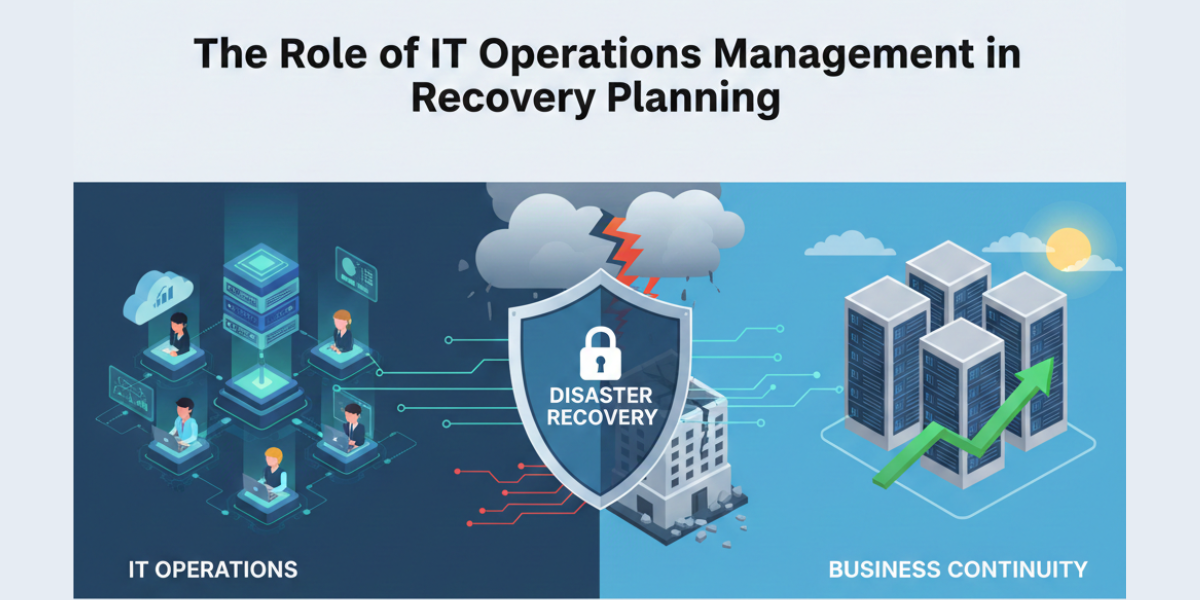
In the digital age, business continuity depends not only on strategic foresight but also on the resilience of the technology systems that support day-to-day operations. Companies rely heavily on interconnected applications, cloud platforms, data pipelines, and automated workflows. With this dependence comes a heightened vulnerability: any significant disruption—whether caused by natural disasters, cyberattacks, system failures, or human error—can bring an organization to a standstill. This is why disaster recovery planning is no longer optional. It is an essential pillar of organizational stability.
At the center of this preparedness lies IT Operations Management (ITOM). While often associated with routine maintenance and performance monitoring, ITOM plays a far more critical role when disaster strikes. From identifying risks and preventing outages to enabling rapid recovery and long-term resilience, strong IT operations are the hidden backbone of effective disaster recovery planning.
Understanding the Connection Between ITOM and Disaster Recovery
Disaster recovery focuses on restoring critical IT systems after a disruption. IT Operations Management, on the other hand, is concerned with managing and optimizing all IT components—including servers, networks, applications, and databases—on a day-to-day basis. These two functions intersect at several crucial points:
Infrastructure Visibility: ITOM tools provide real-time insights into system health, dependencies, and performance. This visibility becomes essential when assessing the impact of a disaster and determining what needs to be restored first.
Automation and Orchestration: Automation reduces the chance of human error and accelerates the execution of recovery procedures.
Monitoring and Alerts: Early detection of potential threats can prevent disasters from escalating into full-scale outages.
Configuration Management: Clearly defined infrastructure configurations ensure efficient and predictable recovery.
When ITOM is intentionally integrated into disaster recovery planning, organizations achieve faster response times, reduced downtime, and a more structured approach to crisis management.
Identifying and Assessing Risks
Every effective disaster recovery plan begins with risk assessment. ITOM systems offer the tools needed to identify weak points within an organization’s IT landscape. By analyzing system logs, usage patterns, and historical issues, IT teams can anticipate potential failures before they occur.
For example, frequent network spikes might indicate underlying hardware issues. Similarly, irregular database latency might suggest a brewing capacity problem. Through continuous monitoring, ITOM helps organizations not only identify vulnerabilities but also categorize them based on their threat level.
This risk-based approach allows for smarter allocation of resources—and ensures that disaster recovery strategies focus on the most mission-critical assets.
Creating a Solid Foundation Through Configuration Management
A major challenge during disaster recovery is understanding how systems were configured before the disruption. Without this knowledge, recovery becomes a guessing game, potentially leading to prolonged downtime or incomplete restoration.
Configuration Management Databases (CMDBs), often part of modern ITOM platforms, store detailed records of system configurations, application dependencies, and service mappings. During a crisis, these records act as an operational blueprint. IT teams can quickly determine:
What applications rely on specific servers
Which databases feed which applications
How changes might affect overall service health
This structured knowledge minimizes complexity and accelerates restoration timelines. Instead of scrambling to piece together infrastructure relationships, teams can follow clearly documented paths to recovery.
Automated Response and Remediation
Automation is one of the greatest strengths of advanced IT operations. In disaster recovery scenarios, automation can be used to:
Trigger failover systems
Deploy backup environments
Launch continuity scripts
Run diagnostics to assess system health
Execute predefined restoration workflows
The consistency and speed of automation reduce human error and ensure recovery efforts align with established procedures.
Self-healing systems—another outcome of modern ITOM—can automatically reroute traffic, allocate additional resources, or reset malfunctioning components before the situation escalates into a full outage. These automated responses are instrumental in minimizing disaster impact.
Real-Time Monitoring and Intelligent Alerting
Disaster recovery relies heavily on early detection. ITOM platforms continuously monitor system performance and send intelligent alerts when anomalies are detected. These alerts can be contextual, indicating not only what happened but why it happened and how it affects other components.
For example, an alert about a failing server may also highlight the critical applications dependent on that server. This helps IT teams prioritize their response and prevent cascading failures.
Real-time monitoring is especially important in hybrid environments where on-premises systems and cloud services coexist. Seamless visibility across these environments allows organizations to respond quickly and effectively during a disaster.
Supporting Cloud-Based Recovery Strategies
As more companies adopt cloud infrastructure, disaster recovery strategies have evolved. Many organizations now use cloud-based backups, virtual failover systems, and distributed data replication models.
ITOM provides the tools needed to manage these complex environments efficiently:
Monitoring cloud workloads
Automating cross-platform operations
Ensuring consistent configurations
Optimizing resource usage during failover
Cloud-enabled ITOM ensures that disaster recovery plans remain flexible, scalable, and aligned with business growth.
Enhancing Communication and Collaboration
Disaster recovery is not just a technical process—it is a coordinated effort across multiple teams. ITOM platforms often include integrated communication tools, dashboards, and collaboration features. These capabilities allow IT personnel, security teams, and business leaders to stay aligned during high-pressure situations.
With centralized communication, decision-making becomes faster and more accurate. Stakeholders can access real-time updates, recovery progress, and system status without relying on fragmented reports.
Continuous Improvement Through Post-Incident Review
A disaster recovery plan should evolve over time. After each incident—whether minor or major—ITOM enables a comprehensive review of what happened, why it happened, and how the response unfolded.
Post-incident data provides insights that help refine:
Response procedures
Infrastructure configuration
Monitoring rules
Automation scripts
Team responsibilities
Continuous improvement strengthens resilience and ensures the organization becomes better prepared with each event.
Conclusion
Disaster recovery planning is far more than documenting responses to rare events—it is a proactive strategy for ensuring business continuity in a world where disruptions are increasingly common. IT Operations Management plays a central role in shaping this strategy by providing the visibility, control, automation, and analytical insights needed to respond effectively when systems fail.
Whether it’s identifying vulnerabilities, maintaining accurate configuration data, automating recovery workflows, or enabling real-time monitoring, ITOM empowers organizations to rebound quickly and minimize the impact of unforeseen disruptions.
With these capabilities, companies can build robust, responsive, and adaptable disaster recovery plans that keep their operations running smoothly—no matter what challenges arise. In this evolving landscape, many organizations also seek support from specialized partners that offer IT Operations Management Services or operate as a ServiceNow Platform Implementation Company, helping them build stronger, more resilient infrastructures.
Share this post
Naijanetwork Forum Statistics
Threads: 38005,
Posts: 47606,
Members: 35552